
This case study explores how district-level implementation, led by government and grounded in data, is beginning to reshape foundational learning systems in Malawi and Uganda.
It is not a story of completed success. It is a system learning in real time.
The Challenge
Across sub-Saharan Africa, foundational learning is increasingly becoming recognized as a priority. Policies are being developed, targets are being set, and national commitments are becoming clearer.
Yet a gap remains between these commitments and what happens where learning actually takes place: in districts, in schools, and in classrooms.
This is where the system meets the child.
At the national level, progress is often measured in aggregates, enrolment figures, assessment results, and system indicators. At the local level, the reality is more immediate. For a parent, learning is not an abstract metric. It is the child in front of them, with expectations, effort, and potential.
Closing this gap requires more than strong policy. It requires systems that function consistently at the point of delivery, where teachers teach, where communities engage, and where children learn.

The Approach: A Sobral-Inspired Model
This work draws on the experience of Sobral, Brazil, a municipality that transformed its foundational learning outcomes through localized action planning, strong data use, regular accountability routines, and deep community ownership.
The logic is simple. Demonstrate what a high-functioning, data-driven education system looks like at the district level, and a replicable blueprint begins to emerge.
At the same time, this is not presented as a finished success. It is an ongoing learning process.
The district model is designed not just as an improvement mechanism, but as a learning system. As implementation unfolds, data is used to continuously test assumptions, identify what is not working, and recalibrate approaches in real time. Some elements work as expected. Others do not. The objective is not to avoid failure, but to surface it early, understand it clearly, and adapt accordingly.
Over time, the ambition is to deepen data use across all aspects of the system, moving progressively toward a fully data-driven ecosystem where decisions at every level are grounded in evidence.
The model rests on four building blocks:
Collaborative goal setting
Ministry officials, district education teams, teachers, parents, and community leaders come together to jointly identify challenges and define shared improvement goals. Ownership is built from the start.
Localized action planning
Districts establish a baseline across key pedagogical and managerial inputs, and co-develop action plans grounded in where they are starting from, not where they aspire to be.
Capacity for data use
District and Ministry teams strengthen their ability to use data for decision making, not just compliance, building internal capability over time.
Regular accountability routines
Quarterly district review meetings and national accountability forums track progress, surface bottlenecks, and keep stakeholders aligned around shared priorities.
Throughout, the non-negotiables are government ownership, local leadership, and grounding decisions in evidence.
Government-Led Implementation in Practice
This work is government-led.
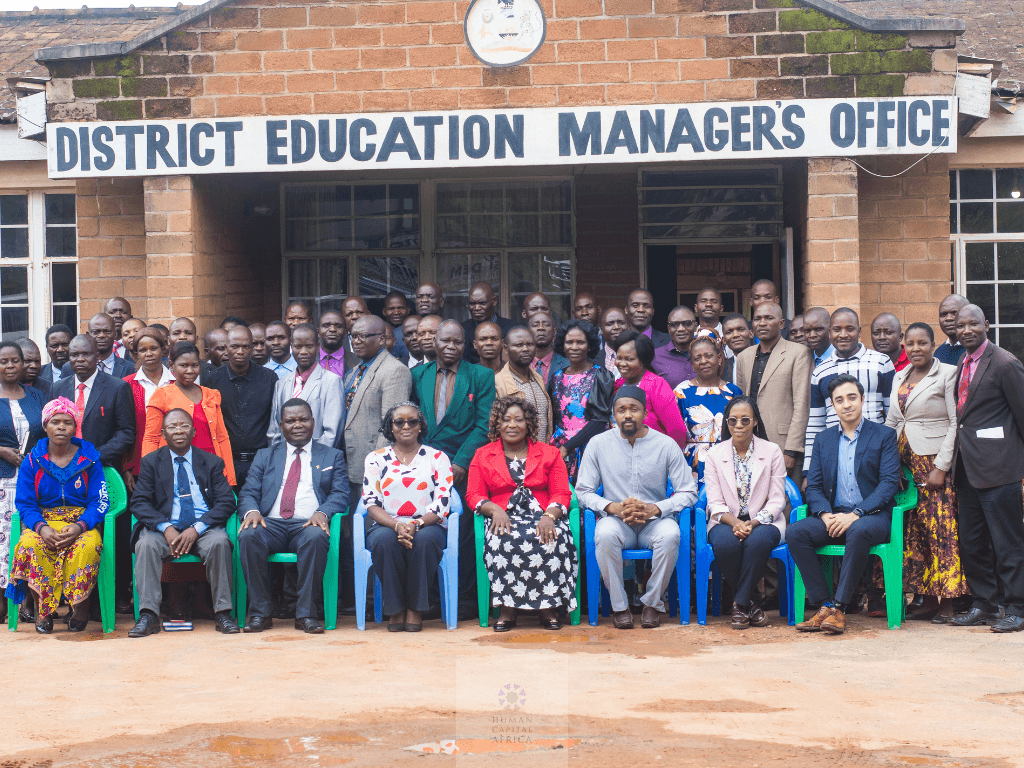
District officials convene review meetings.
Government structures define priorities and drive implementation.
External support focuses on strengthening processes, data use, and consistency.
At the center of the model is accountability, not as a one-off event, but as a habit.
District review meetings bring together:
- Ministry and district officials
- School leaders and teachers
- PTA representatives
- Traditional leaders and chiefs
- Religious groups
- Mother groups
- Political leadership at the council and parliamentary levels
These forums create a shared space where performance is reviewed, challenges are surfaced, and decisions are made collectively.
Over time, the aim is to institutionalize these routines so they become part of how the system functions, independent of external support.
Malawi: What Progress Looks Like on the Ground
Work in Malawi began in 2023, with Ntchisi and Blantyre Urban selected as initial model districts, later expanding to Mzimba South. Strong Ministry participation in district review processes has been an important enabling factor.
Across the three districts, early signals of progress are beginning to emerge:
Communities are mobilizing to fill resource gaps
Traditional leaders and community structures are organizing school-led fundraising to procure teaching and learning materials. In Blantyre Urban, this has translated into a significant community fundraise for textbooks and materials.
New governance structures are emerging
A district proposal committee has been established in Blantyre Urban to coordinate partner engagement, originating from within the district itself. They have set up a data-backed way to move book to student ratio from an average above 1:30, to 1:2 over the next couple of years.
Traditional authority is being activated
In Mzimba South, engagement with local chiefs is strengthening community sensitization and shaping demand for improved foundational learning outcomes.
National momentum is building
Plans are underway for a national accountability forum to align government and partners around shared priorities, building on district-level progress.
Uganda: From Endorsement to Implementation
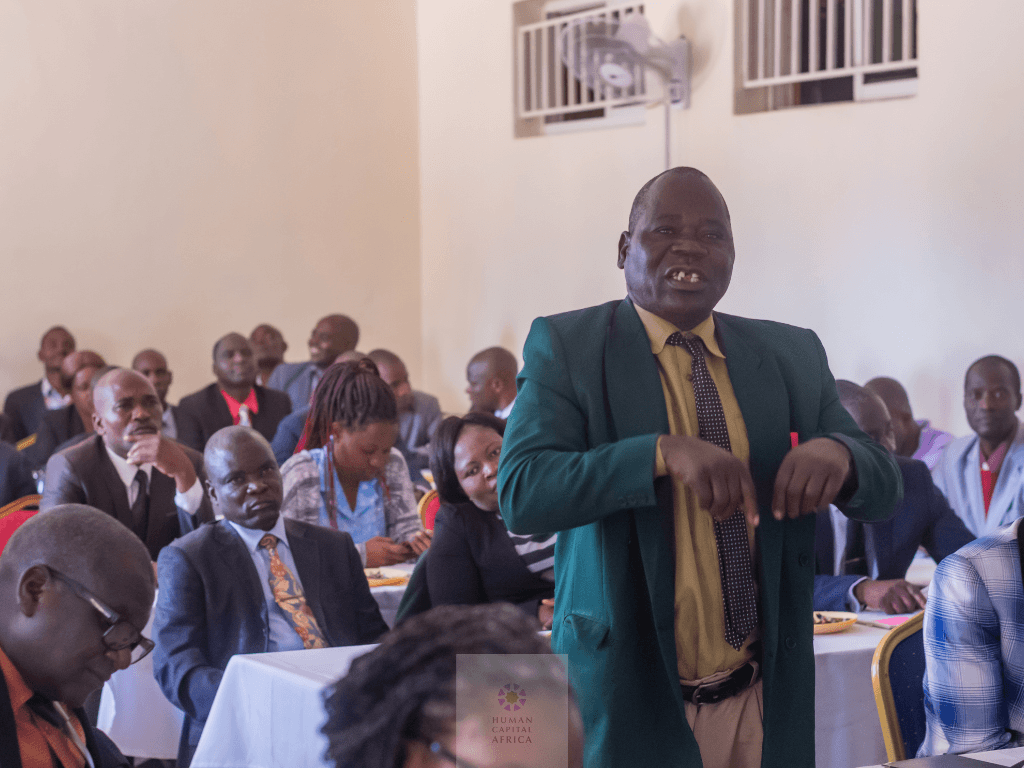
Engagement in Uganda began with Kitgum and Mpigi selected as model districts, and implementation commencing in 2025. The Ministry has played an active role in endorsing district work plans, co-chairing accountability structures, and convening national discussions.
Across both districts, implementation has been shaped by priorities identified by district stakeholders themselves:
Multi-stakeholder buy-in was secured early
Consultations with a wide range of district actors helped identify priorities and co-develop foundational learning action plans, building shared ownership from the outset.
District governance structures are becoming more functional
Steering committees chaired by district leadership are operational, with monthly meetings and quarterly review routines beginning to take root.
Smarter use of existing resources is emerging
Teacher deployment analysis has identified opportunities to optimize allocation across grade levels within existing schools, improving efficiency without requiring additional recruitment.
Community engagement is deepening
Parental sensitization campaigns and community dialogues are underway, alongside mapping of local partners and resources to improve coordination.
Connecting Districts to National Accountability
District-level work only creates durable change when connected to national accountability systems. Without national visibility, district progress remains local. Without district evidence, national discussions remain abstract.
In Uganda, a national accountability meeting brought together Ministry departments, development partners, and civil society to assess progress and define next steps. Priorities such as school-based mentoring, formative assessment, and dedicated budget lines emerged from these discussions.
In Malawi, a similar national process is in development, building on lessons from district implementation.
What Is Being Learned
Collaborative design is not optional
Action plans co-created with stakeholders carry a level of ownership that cannot be replicated through top-down approaches.
Data creates accountability without blame
Transparent data shifts conversations from assigning responsibility to identifying solutions.
Community engagement is structural, not supplementary
Communities are not observers of reform. They are participants in it.
Capacity building must be tied to implementation rhythms
Capability strengthens when it is embedded within real decision-making cycles.
The Opportunity Ahead
Even within a challenging aid environment and competing government priorities, early signals from work across multiple districts suggest that meaningful progress is possible.
But this work is still in motion.
What is emerging is not a finished model, but a system that is learning. Assessment routines are being established. Community engagement is strengthening. Governance structures are taking shape. At the same time, gaps remain, and not all approaches will deliver as intended.
The distinguishing feature of this model is not that it avoids failure, but that it is designed to learn from it. Data is used continuously to refine implementation, adjust priorities, and strengthen what works.
Over time, the goal is to deepen data use across all elements of the system, moving toward a fully data-driven ecosystem where improvement is sustained not by external support but by internal capability.
What Malawi and Uganda are demonstrating is not the end of reform, but the beginnings of a cyclic system that can diagnose and improve itself.